Japan · Tokyo
Tokyo: where we stayed, ate and visited
Eight days in Tokyo, split between the start of the trip and the end. Here is what we visited, where we ate, and what I would recommend if you are going.
What we did day by day
Tokyo was splitted in two blocks, days 1–3 on arrival and days 13–17 after coming back from Kanazawa, before the flight home, with Nikko and Kamakura as day trips from the city.
Splitting it was partly logistical: our flights went in and out of Tokyo, so we were there at both ends anyway. It also meant we could leave the shopping until the end, instead of carrying everything around the country for two weeks.
Day 1: Arrival and Shinjuku
We landed at Haneda in the morning and, since we had all our luggage with us, we took a taxi to the hotel, The Knot Tokyo Shinjuku. I go into more detail about it in the Where we stayed section. The taxi cost about 9,000 JPY, roughly €55 or US$60. Taxis in Japan are excellent. There are plenty of them, the drivers are helpful, and here is a fun detail: you never open or close the door yourself, the driver does it from his seat.
We left the luggage at the hotel and went out to explore. That first day was all Shinjuku. The thing that struck us as soon as we stepped outside was the sound of the cicadas, an insect that makes a loud, distinctive noise through the warm summer months. At first it feels a bit much, but you get used to it, and eventually you enjoy it.
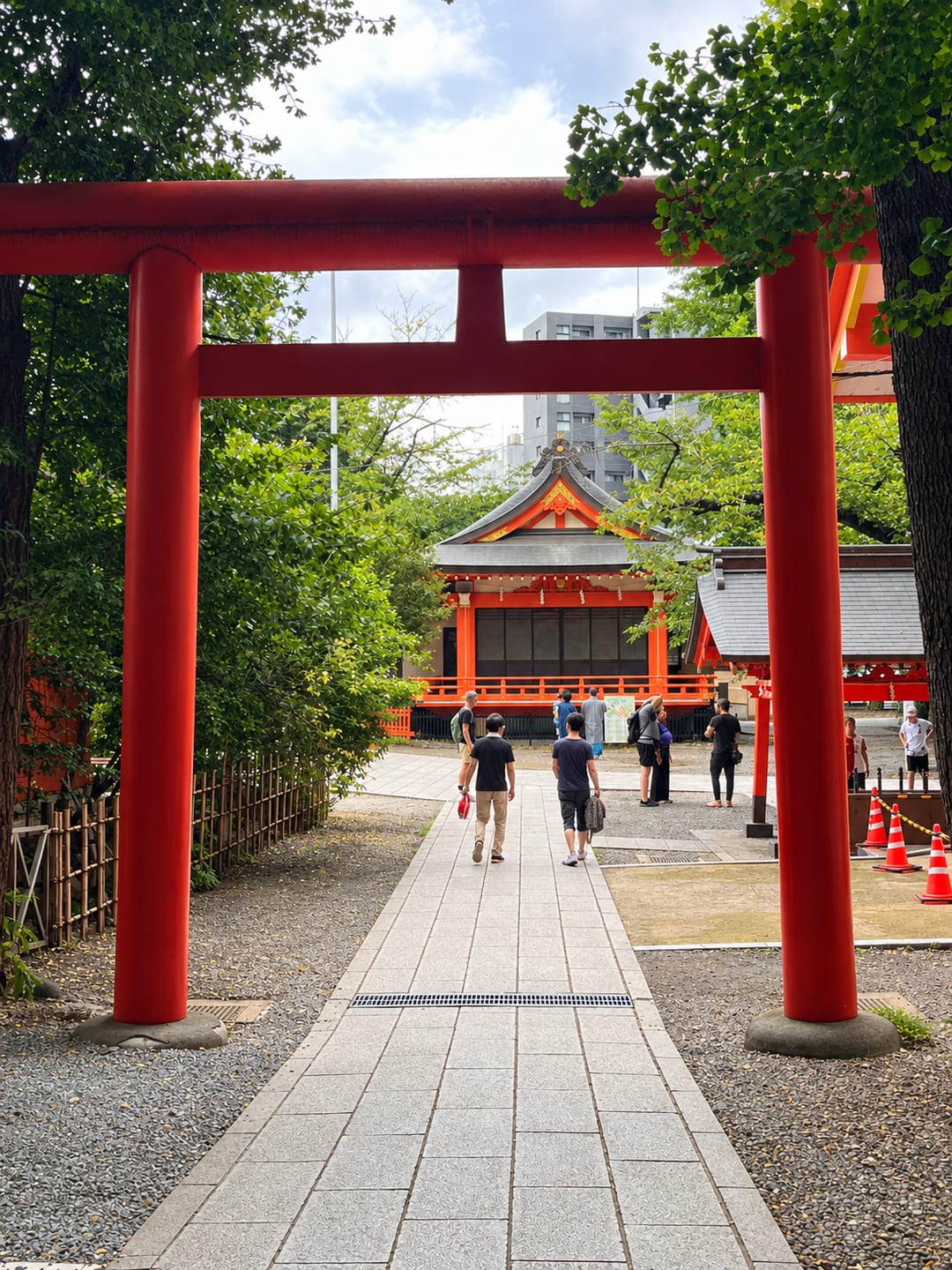
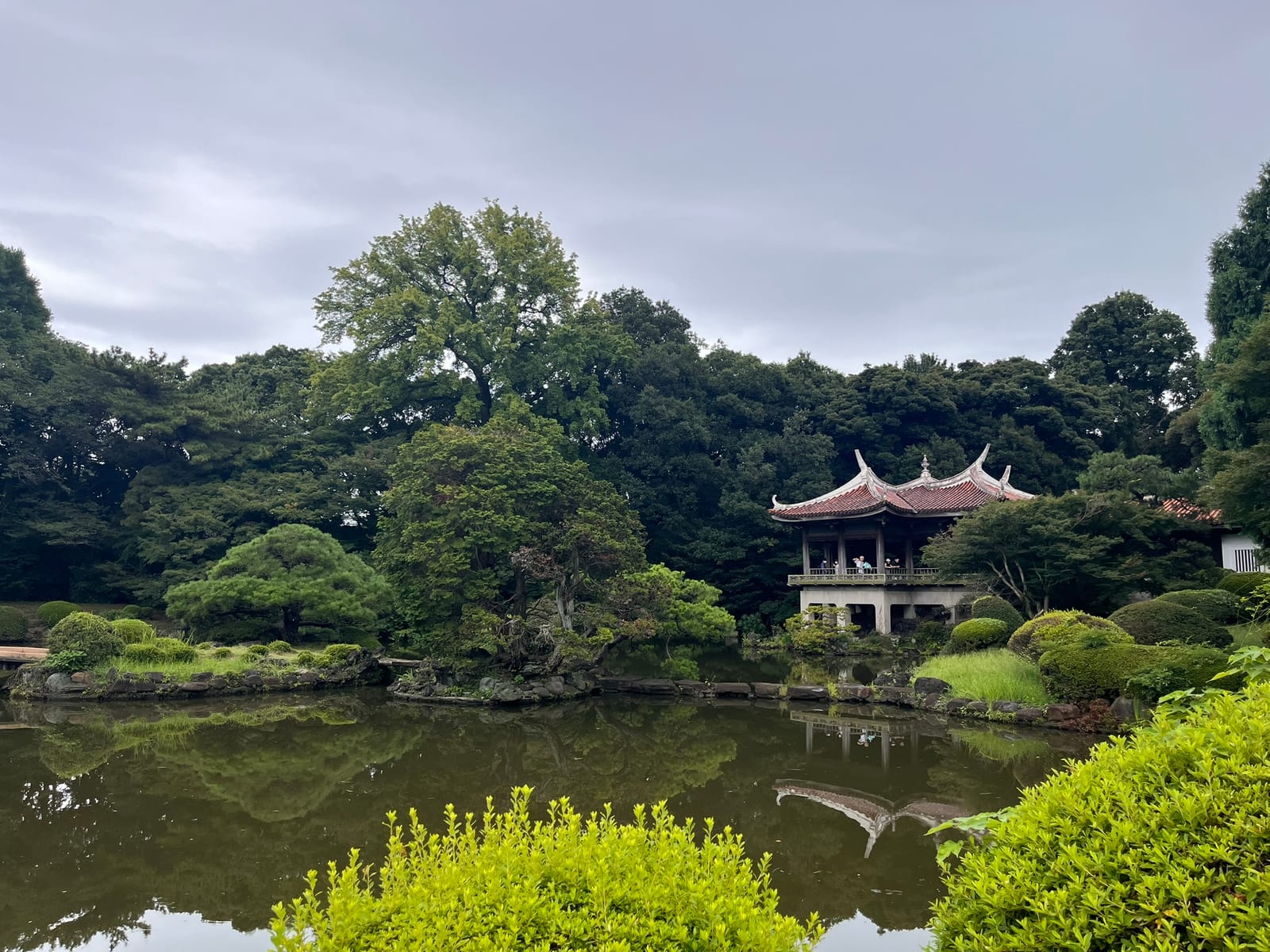
Our first stop was Hanazono Shrine, a Shinto shrine in the heart of Shinjuku, it was founded in the mid-17th century. It is a good first taste of what is coming. From there we walked to Shinjuku Gyoen National Garden. The entrance fee is about 500 yen, around €3, and it was completely worth it. The park has several distinct sections: a French formal garden, an English landscape garden and a Japanese traditional garden. It is designed to offer something in every season, so whenever you go there is something to see. Our favourite was the Japanese traditional garden, with its pond and wooden bridge. You can also see the Shinjuku skyscrapers rising behind the trees, which makes the whole thing quite striking.
Afterwards we looked for somewhere to eat nearby and ended up in a cosy izakaya, Hakata Oden to Jinenjo Yokayokadō (博多おでんと自然薯 よかよか堂). It was an incredible first meal. We let the chef choose the dishes for us and every one of them was excellent, so good that we kept ordering more just to try other things.
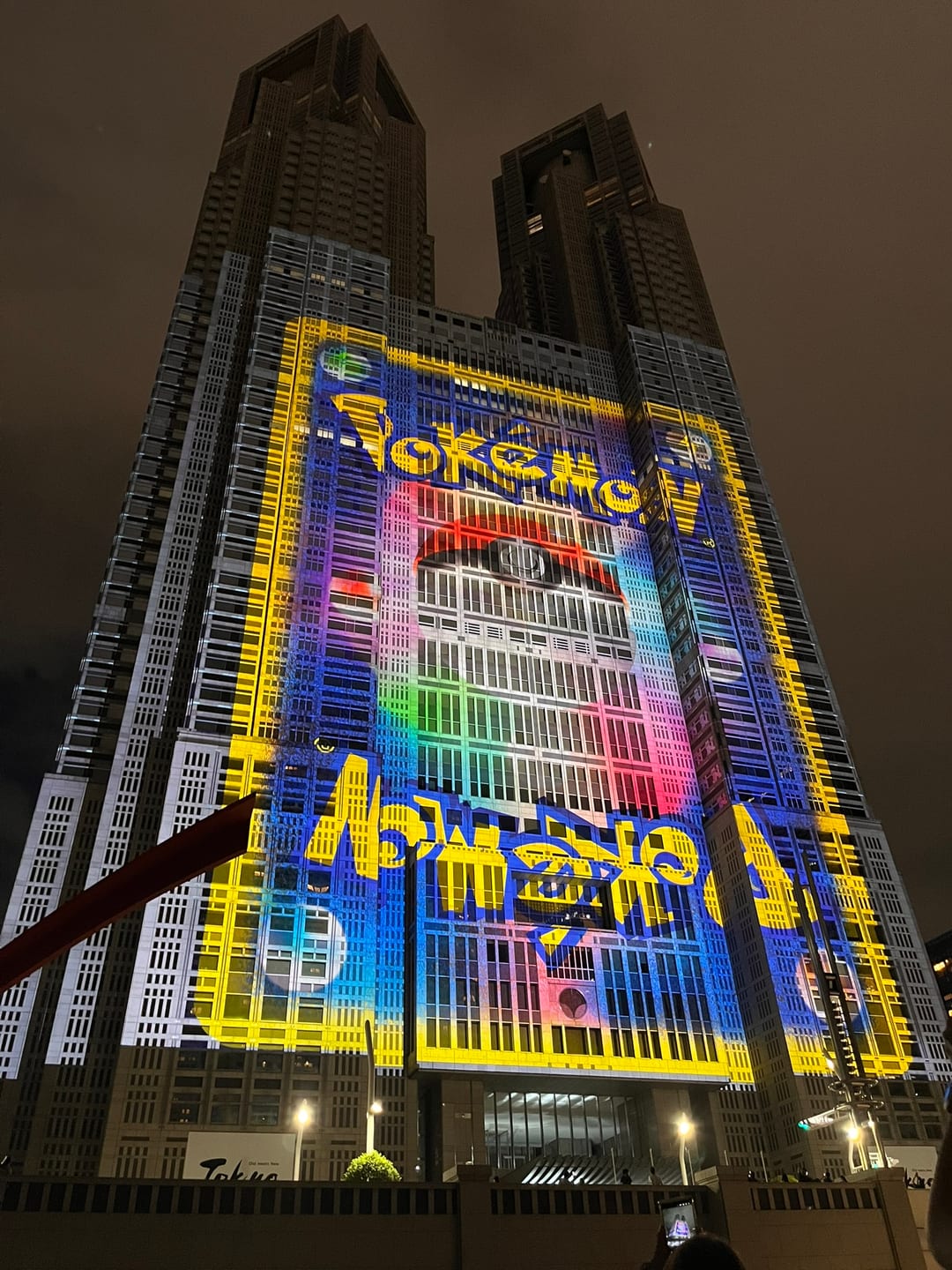
Then we went back to the hotel to check in and rest. At around 7pm we walked to the plaza in front of the Tokyo Metropolitan Government Building, where they run a projection mapping show on the building itself. Plenty of people go to watch. They run several 15-minute shows, usually between 6:30pm and 9:30pm, and it is genuinely impressive. You can check the schedule on the Tokyo Projection Mapping Project site.
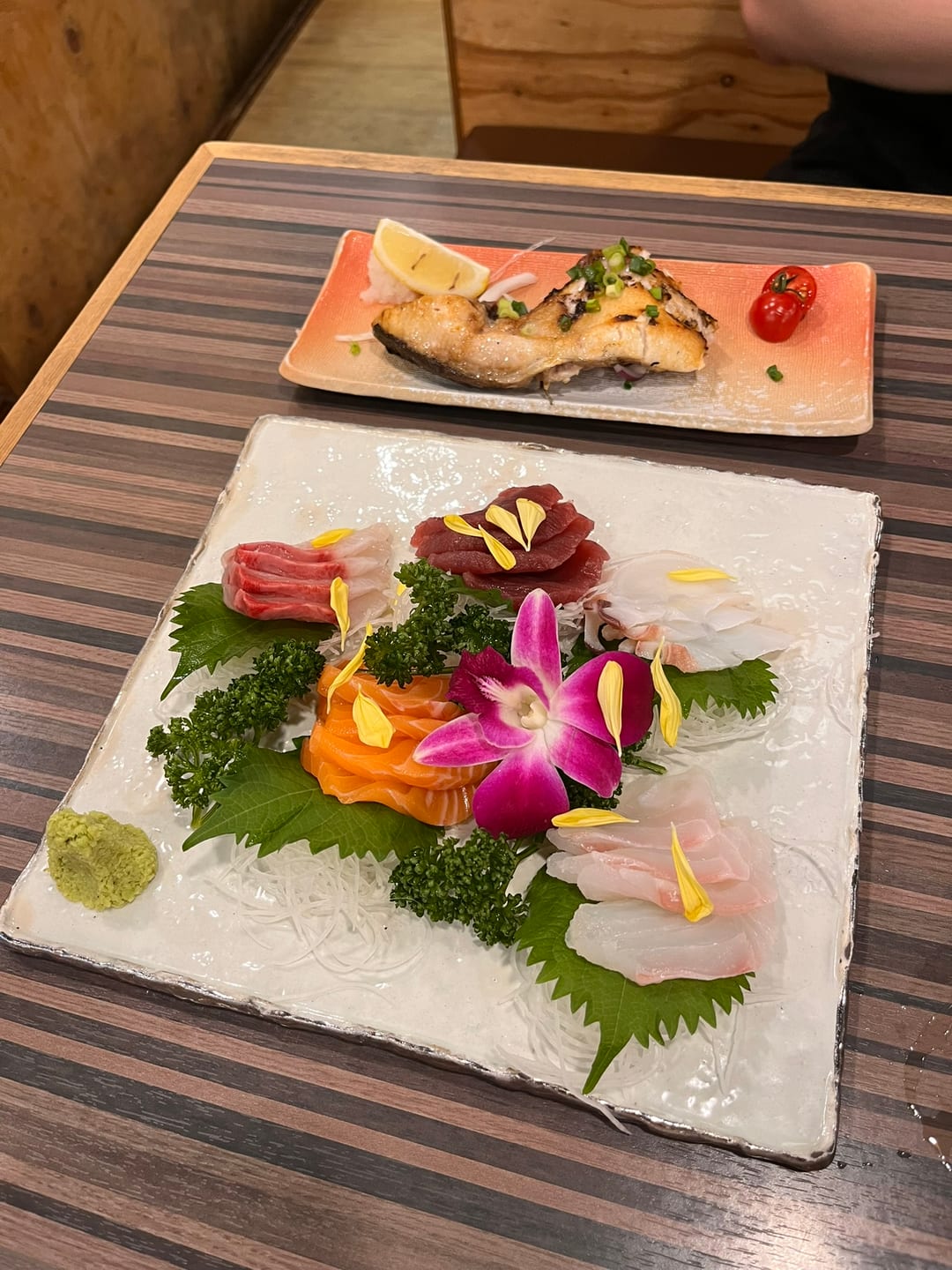
After that we headed to Shinjuku-sanchome, right next to Shinjuku Station. It has a lively nightlife and a lot of restaurants and bars. We wandered around looking for somewhere to eat, spotted a place full of locals and went in. We ordered sashimi, tempura and a few other things. Once again, the food was superb.
Day 2: Asakusa and Ueno
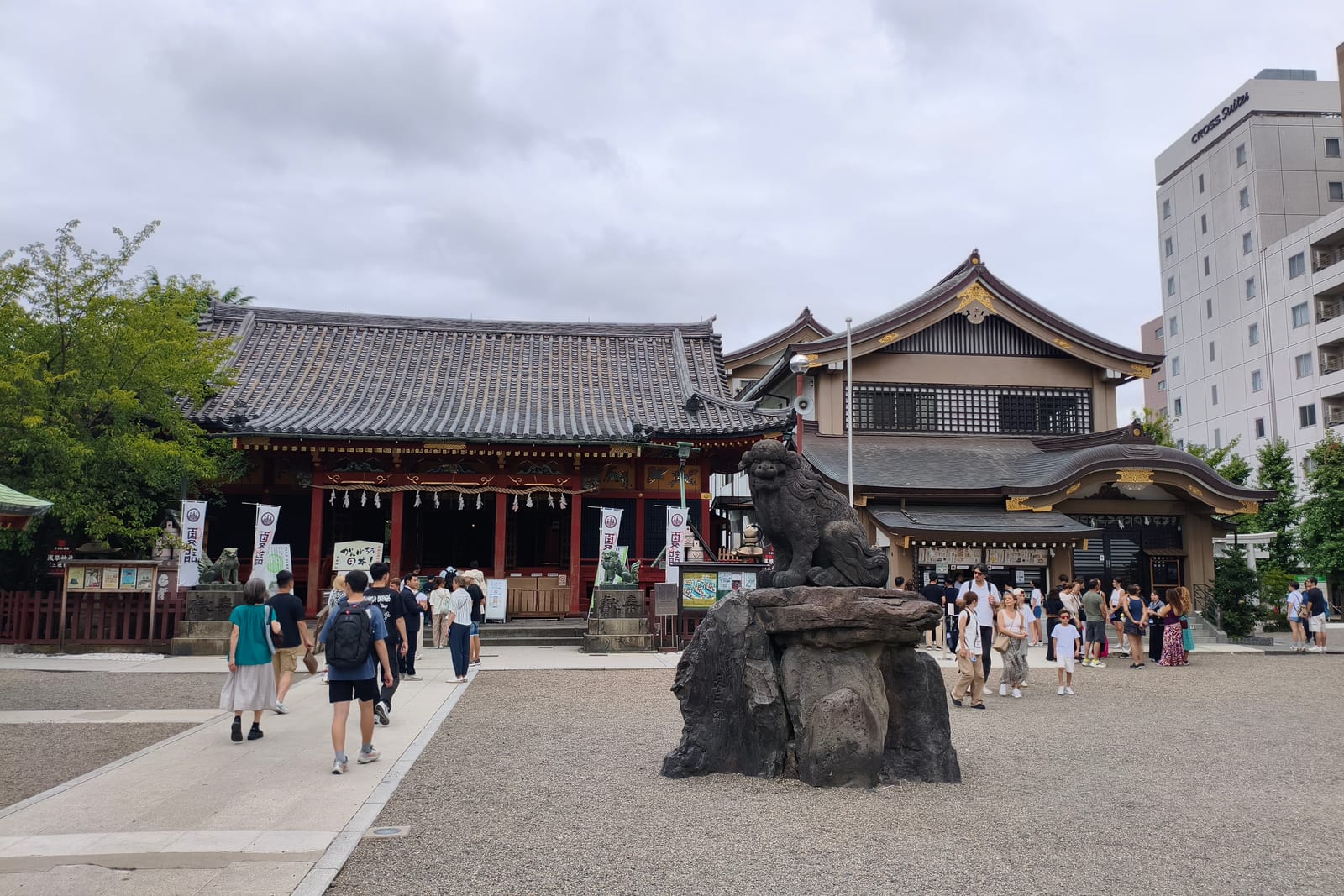
On our second day we took the metro to Asakusa. We walked along the Nakamise Dori, a traditional shopping street lined with stalls selling everything from souvenirs to local delicacies. At the end of it is the famous Senso-ji Temple, the oldest Buddhist temple in Tokyo. We lit incense and placed it in the jokoro, the large incense burner in front of the main hall. People waft the rising smoke over themselves, or "bathe" in it, because it is believed to purify the body and spirit.
Right next to it is Asakusa Shrine, a Shinto shrine that honours the three men who founded Senso-ji. We recommend to book a guided visit in advance for the Asakusa area, it's worth to understand in more detail the history and culture of the area.
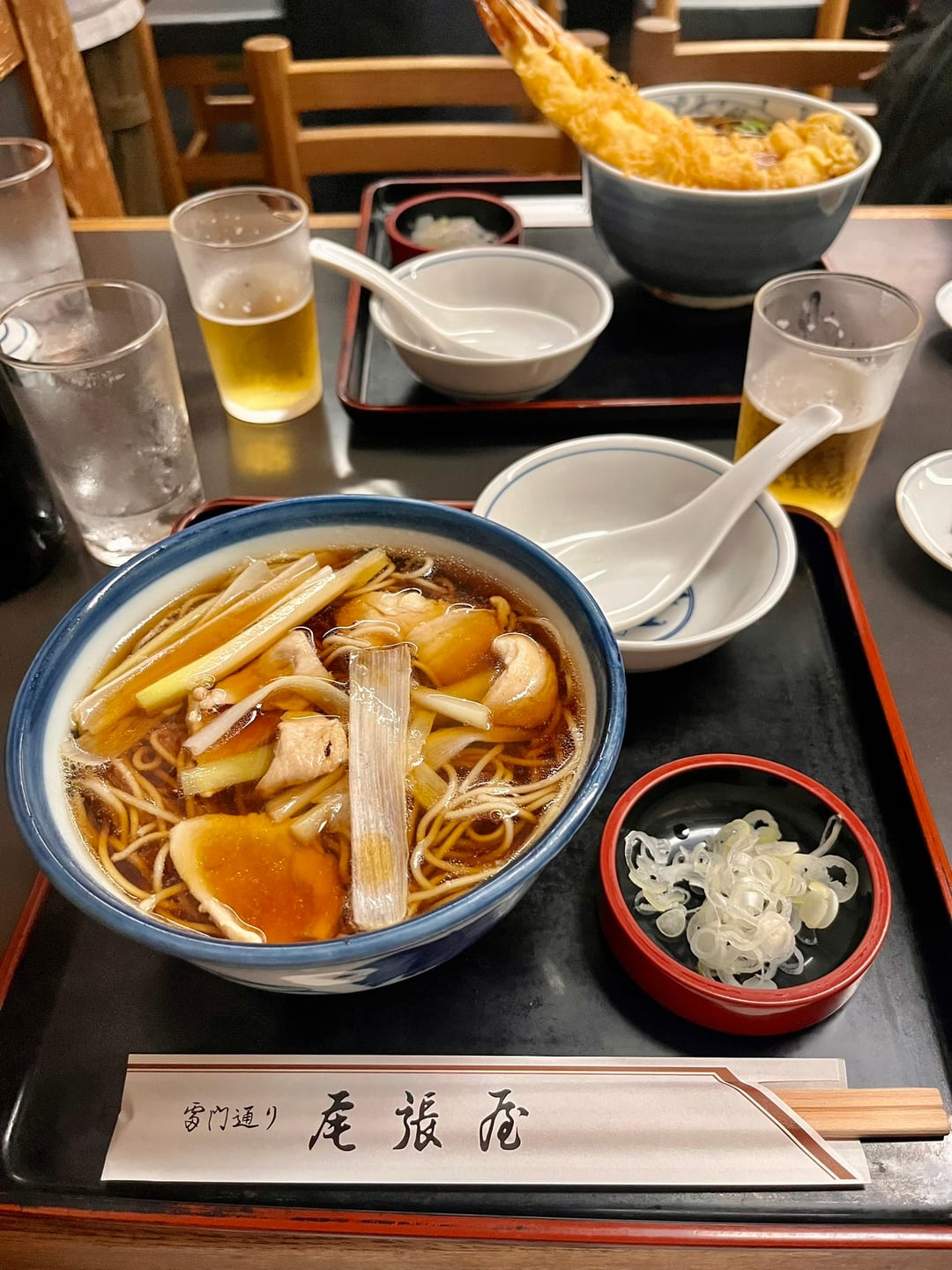
After that we went to have lunch at a small soba restaurant near the temple called Owariya, they only accept cash. We had the chicken spba and the shrimp tempura soba (Ebi-ten soba), and both were delicious.
In the afternoon, we went to the Tokyo National Museum in Ueno. We bought tickets for the permanent collection and for a special exhibition on Kūkai (Kōbō Daishi), the founder of Shingon Buddhism. The museum is huge, with several buildings, so we spent most of our time in the Japanese Gallery, the Asian Gallery and the Heiseikan, where the special exhibition was held.
The Japanese Gallery has a lot of fascinating pieces, including prints by Katsushika Hokusai, the artist behind The Great Wave off Kanagawa. It was a stunning display.
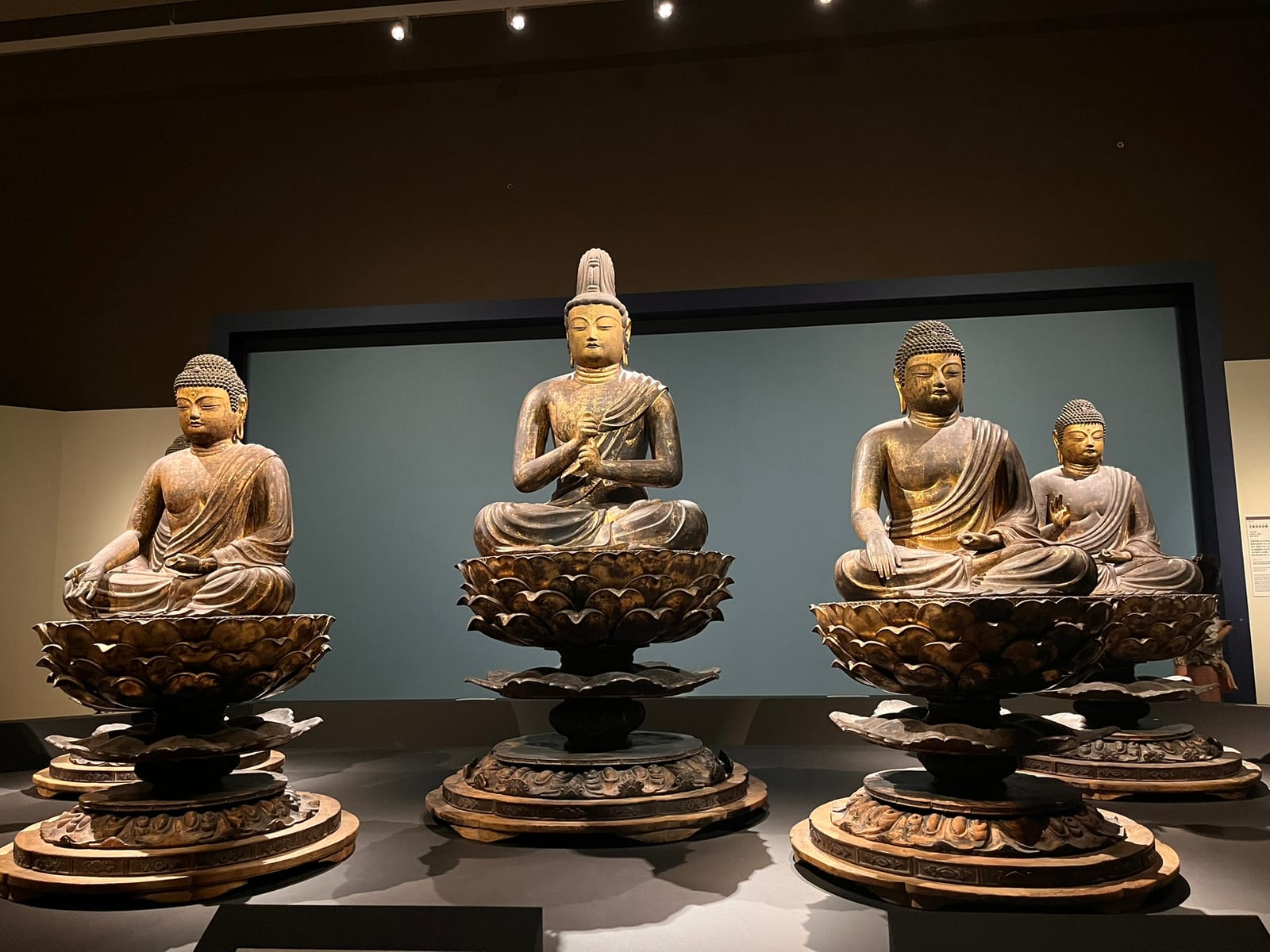
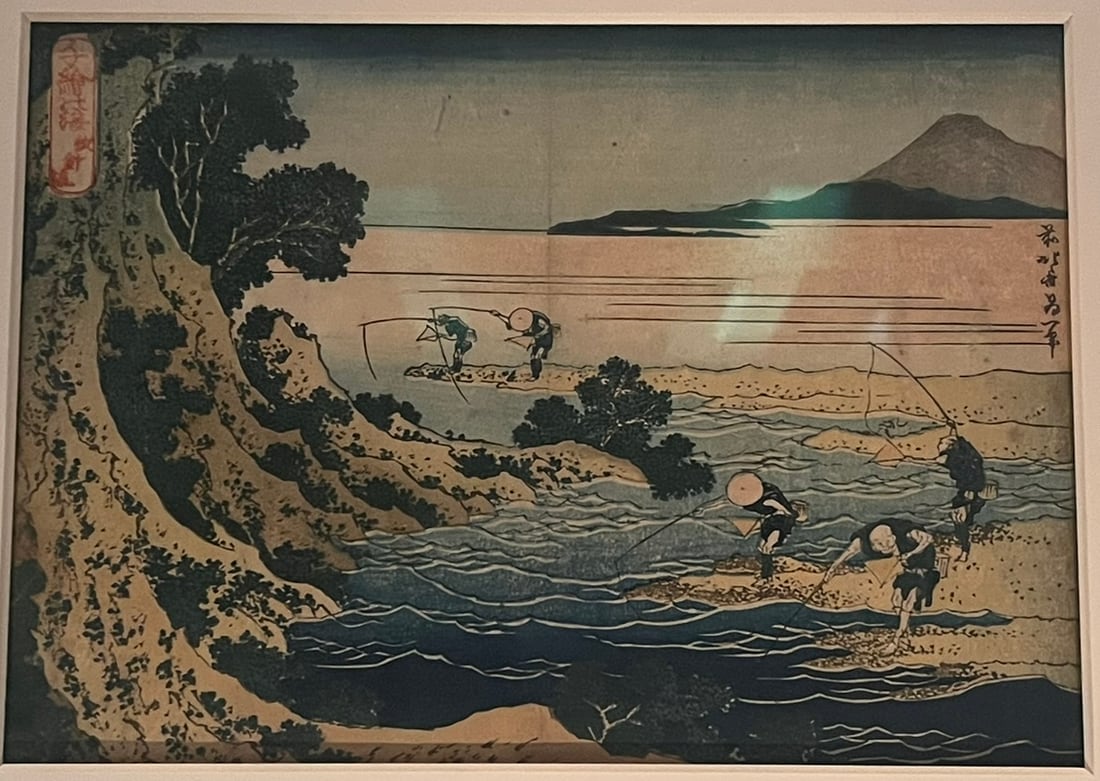
After the museum we walked through Ueno Park, then went back to the hotel for a short rest before dinner in the hotel since the next day was going to be busy.
Day 3: Nikko
We left from Shinjuku Station. There are several ways to get to Nikko from Shinjuku, but we took the Tobu limited express, which runs directly to Tobu-Nikko station. It takes about two hours and costs around 4,140 yen for an adult one-way ticket. Other trains will also get you to Nikko, but the shrines and temples are closer to Tobu-Nikko station, so take that into account when planning your trip. From Tobu-Nikko we took a short bus ride to the main sights. You could walk, but it takes around 30 to 40 minutes. You can buy the bus tickets at Tobu-Nikko station itself. Since we had a lot to see, we also bought lunch boxes (ekiben) at the station, and I have to say they were quite good.
On the bus, look to your left on the way up to see the Shinkyō Bridge, a beautiful red bridge over the river. We got off at the stop closest to the shrines and temples, and from there it is a short walk uphill to the complex. Inside are some impressive structures, including Nikkō Tōshō-gū, the Shinkyūsha stable with the famous Three Wise Monkeys (Sanzaru), and the Yōmeimon Gate, all surrounded by beautiful forest. If you are not on a guided tour, we highly recommend renting the audio guide (500 yen) at the entrance. There are so many details that it gives a lot more context to the history and meaning of each building. An example is the Nemuri-neko, the Sleeping Cat, a small carving above one of the gateways. It is easy to walk past, but it is one of the most famous details in the complex.
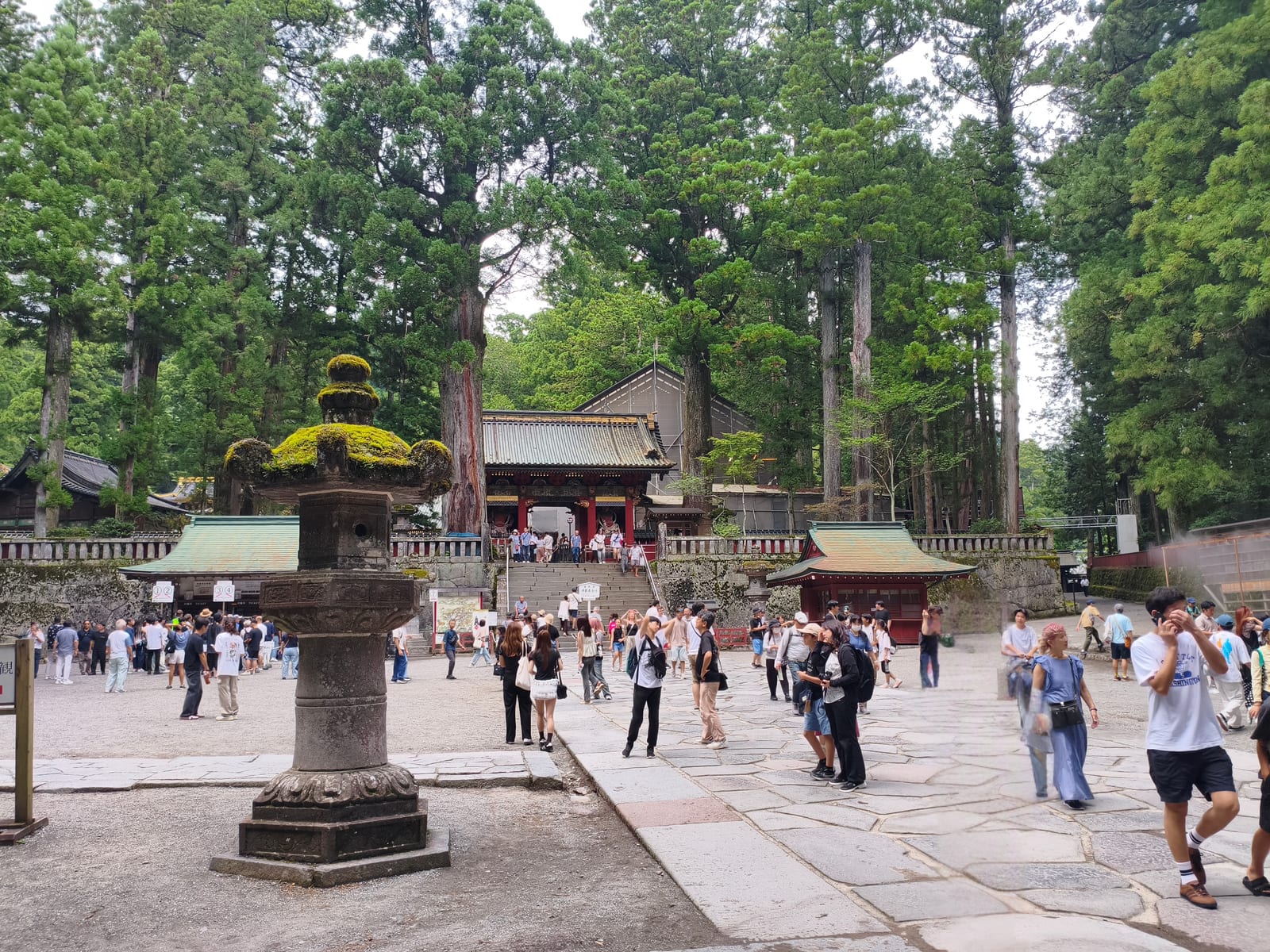
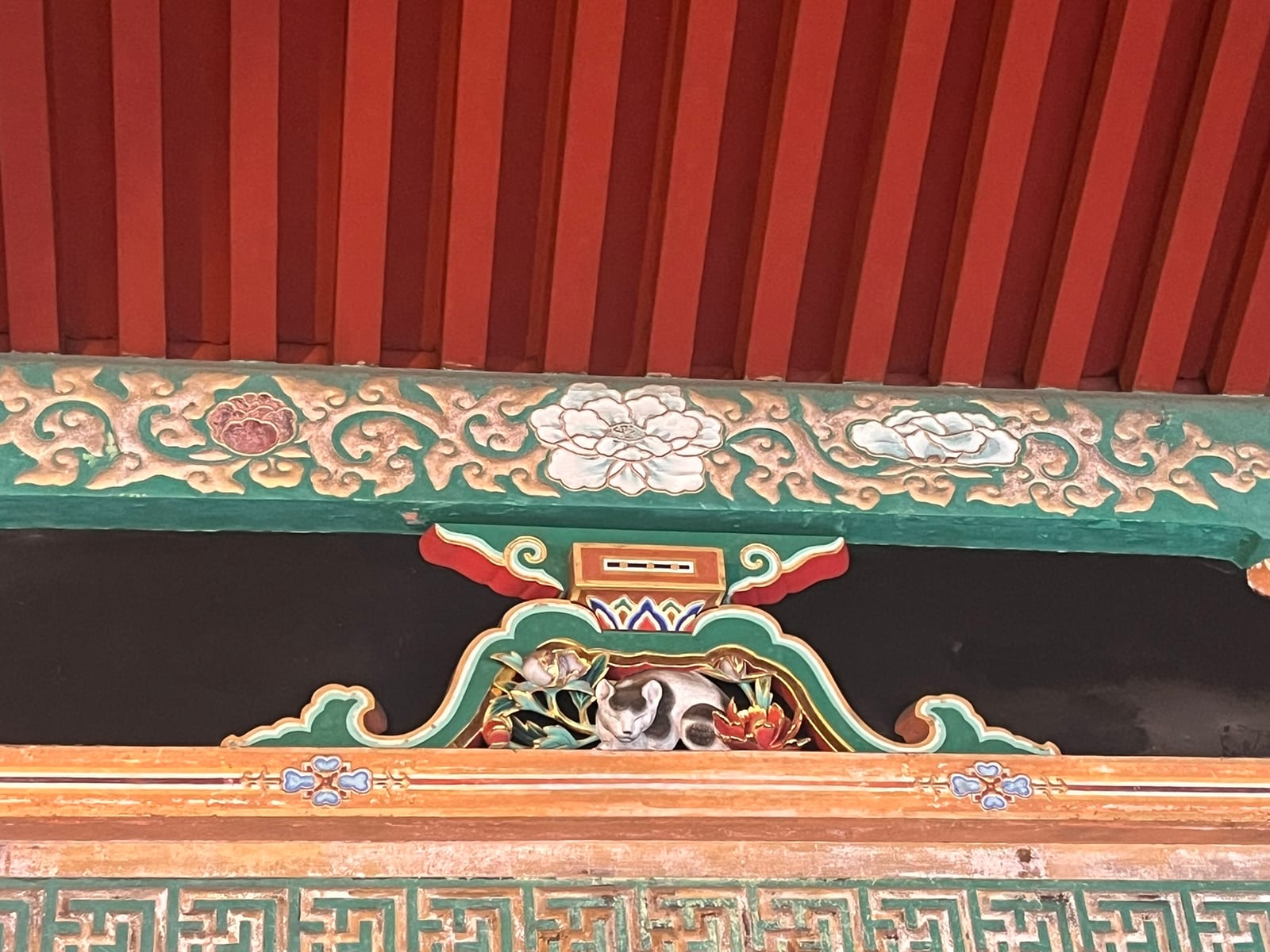
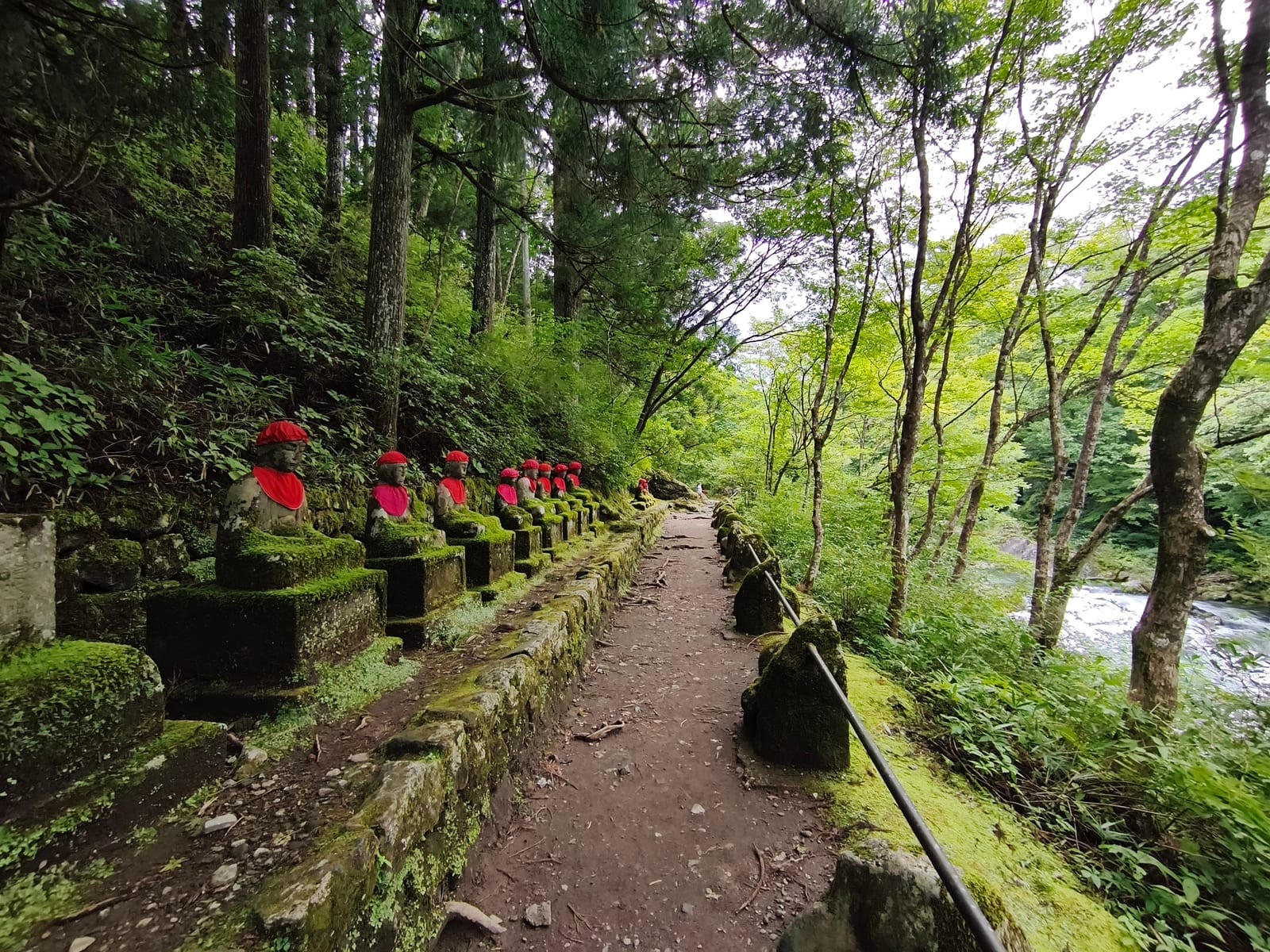
After visiting the shrines and temples, we ate our lunch boxes in an area near the complex with benches and bins (exact spot here). It was the most appropriate place we found to eat without disturbing the surroundings. From there we walked to the Kanmangafuchi Abyss, about 20 minutes from the complex. That place is magical. There was almost nobody there when we went, and you walk past a long, mysterious row of stone Jizo statues in beautiful mountain scenery beside the Daiya River.
After that we took the bus back to Tobu-Nikko station and the train back to Tokyo. This time there was no direct train back to Shinjuku available, so we took a direct train to another station in Tokyo and the metro from there. The return was more tiring, around two and a half hours in total. But the Shrines and Temples of Nikko are completely worth it: the buildings and the scenery are just amazing.
Before getting back to the hotel we grabbed some egg sandwiches at a 7-Eleven and had dinner in our room. It was a tiring day, but a very memorable one.
On day 4 we left Tokyo for the rest of the route: Kyoto, Hiroshima and Miyajima, and Kanazawa and Shirakawa-go, each with its own write-up. We came back to Tokyo on day 13 and stayed until the end of the trip on day 17. The full route is in the two-week overview.
Day 13: Back in Tokyo, staying in Ginza
We took the Shinkansen back to Tokyo from Kanazawa and headed to Ginza, where we stayed at the Solaria Nishitetsu Hotel. I go into more detail about it in the Where we stayed section.
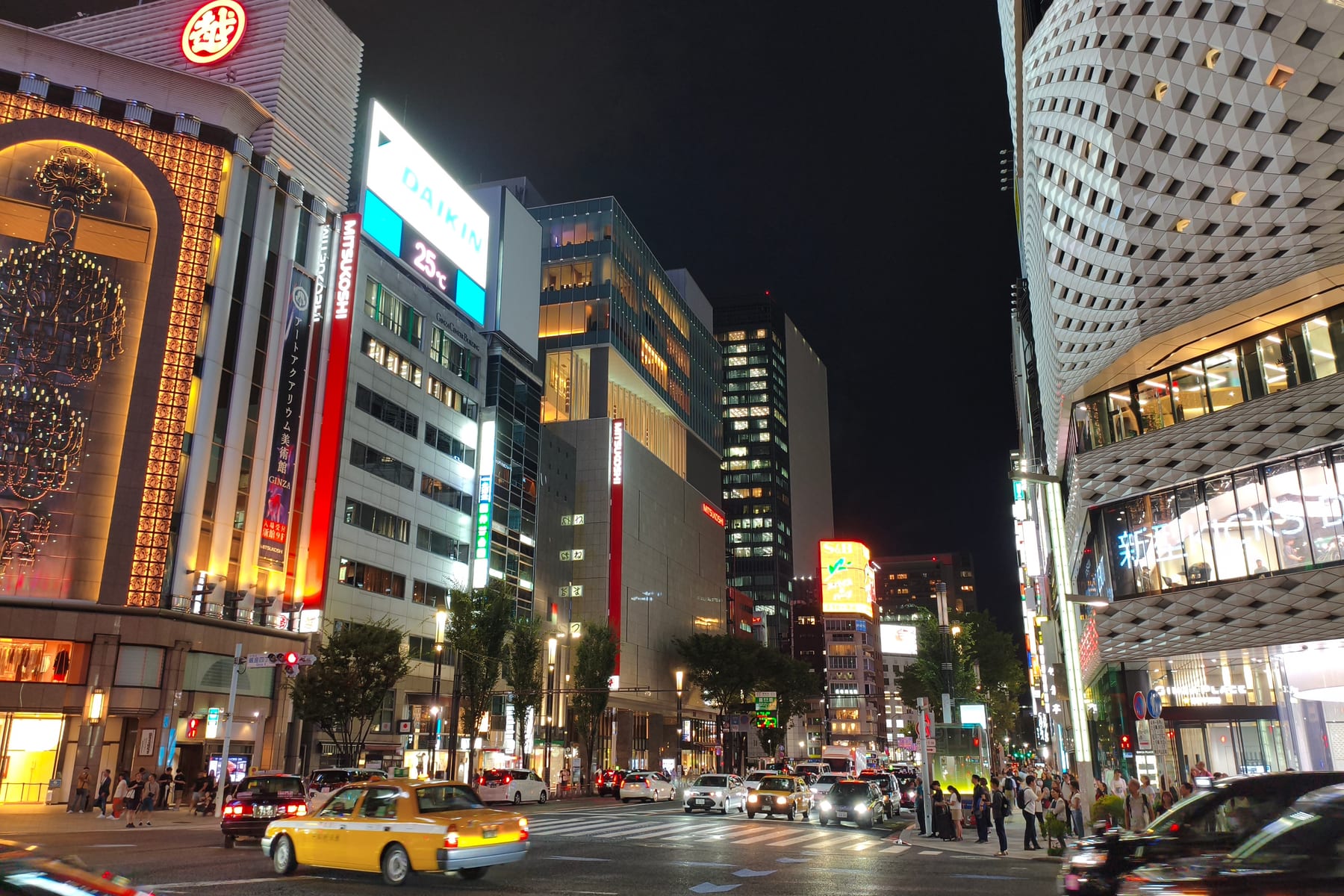
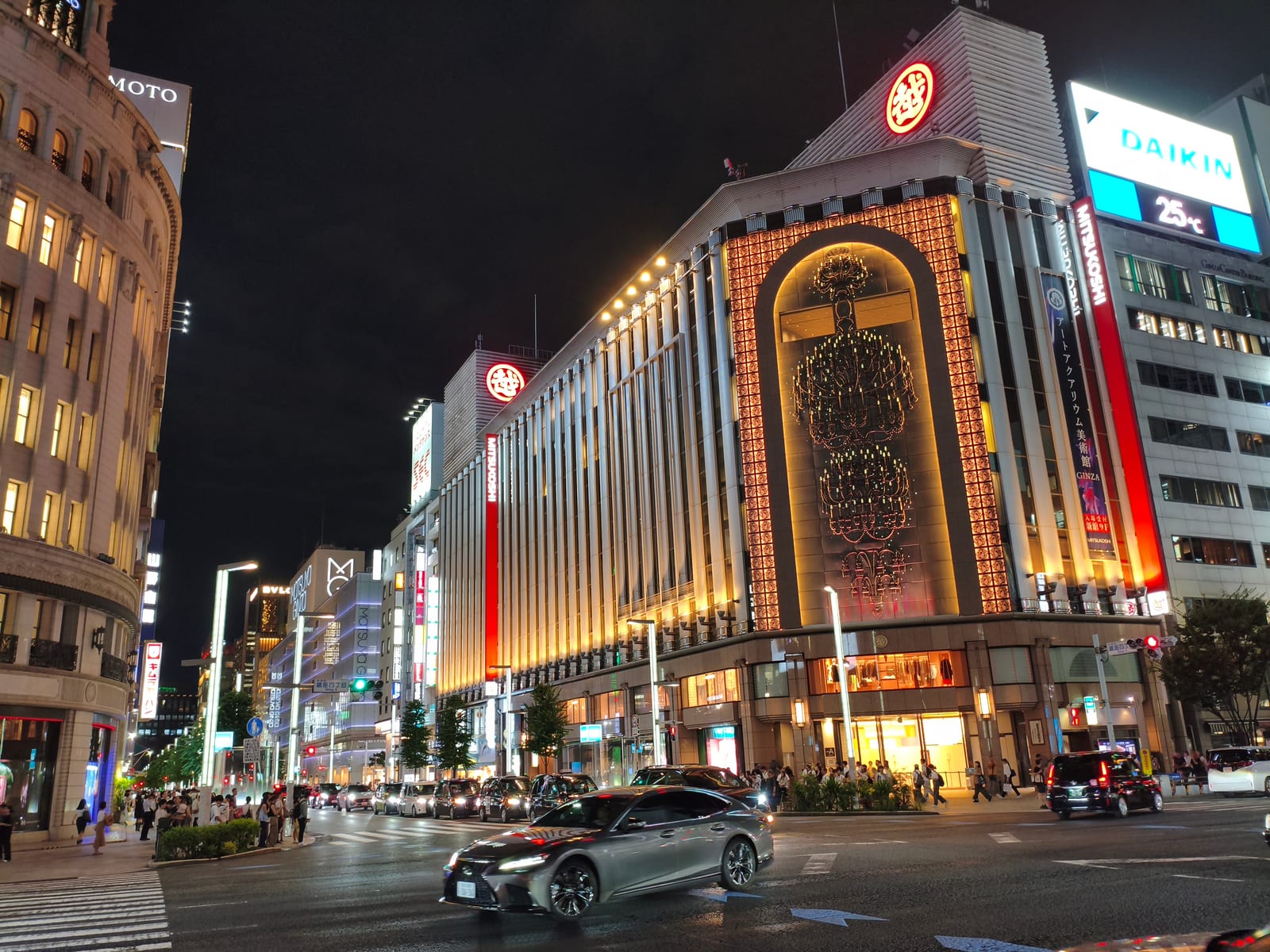
Ginza has a completely different vibe from Shinjuku: high-end shops and restaurants everywhere, a lively atmosphere, and you can feel the luxury. It also has a lot more tourists, so it can feel less unique, but it is impressive to see. Another good thing about Ginza is that it is very central, so you can get anywhere from there.
We had an improvised lunch at the Ginza Six mall and then headed to Akihabara, saving the Ginza shopping for the following day. Akihabara is the manga, anime and otaku district of Tokyo. There you can find plenty of anime merchandise, figures and collectible card games. It is full of shops selling Pokémon cards among others, where you can also trade them. It is really interesting to see, and we highly recommend going to experience the atmosphere and the subculture.
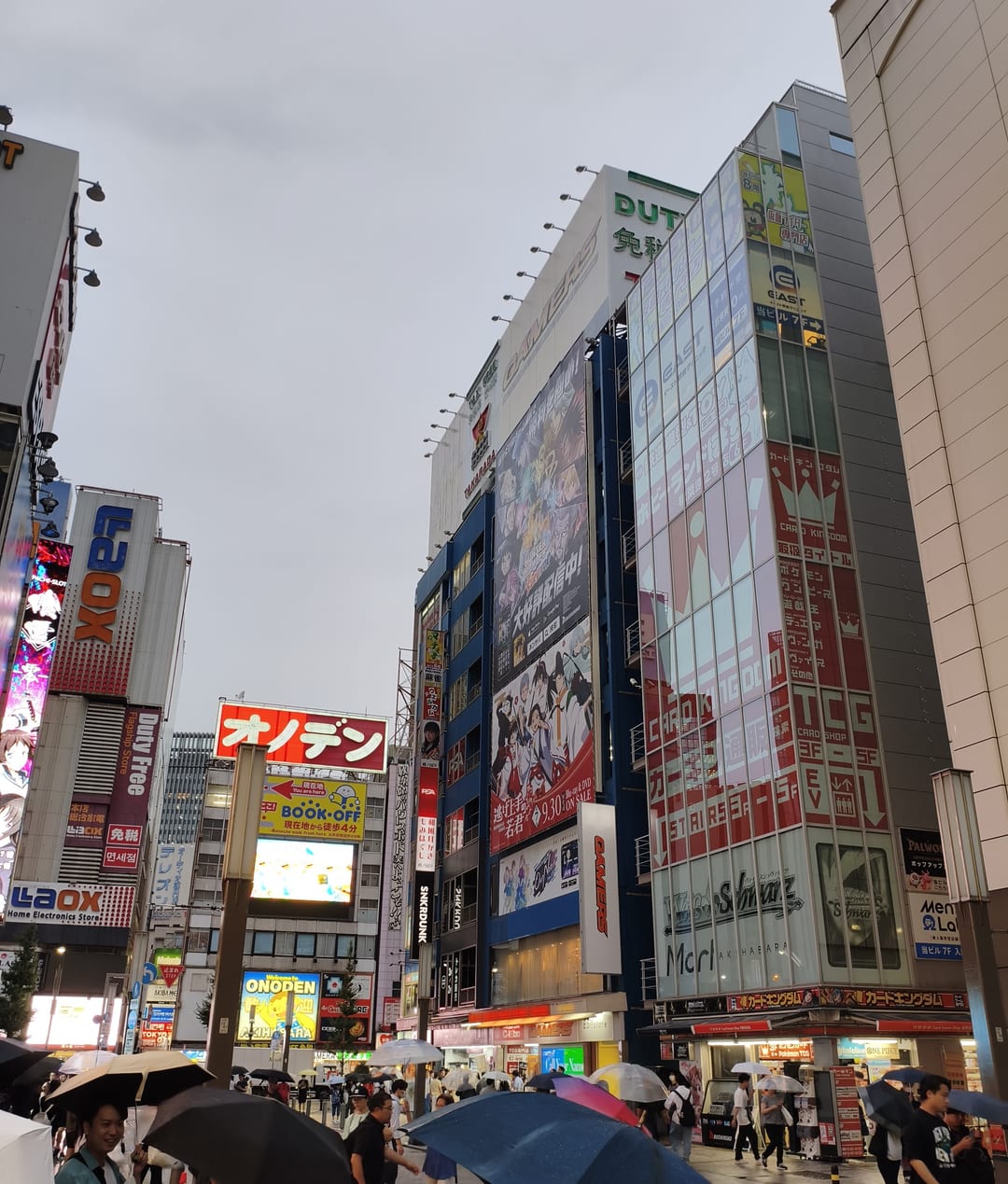
There are also big arcades there, with plenty of machines to play. We went to HEY (Hirose Entertainment Yard) Taito and GiGO Akihabara Building 3, played a few games and had a great time. Afterwards we ate some street food nearby. Street food in Akihabara, and in Tokyo generally, is less about stalls and more about tiny street-level places with a counter and a window opening onto the street. After that we went back to the hotel.
Day 14: Shopping in Ginza
We headed out to explore the Ginza shopping area. There are plenty of high-end shops there: Tiffany & Co., Rolex, Richard Mille, Cartier, Chanel. There is also the Ginza Six mall, full of stores, and if you are into reading there is a very big bookshop called Tsutaya Books where you can find a lot of books in English, not only novels but also books on Japanese history that are pretty interesting. Ginza also has less expensive but very popular brands like Uniqlo, whose flagship store has 12 floors. The 11th floor is worth a look: they usually have collections made with Japanese artists, more themed than the standard range.
So we bought clothes for ourselves, souvenirs, some fun snacks such as all kinds of Kit Kats, and popular skincare products. A popular souvenir to buy is the Daruma, a traditional Japanese good luck charm that symbolises perseverance and goal-setting. You paint one eye black when making a wish or setting yourself a goal, to stay motivated. Once you achieve it, you paint the other eye to complete the ritual.
It was a more relaxed day, a break from the pace we had been keeping, and a chance to just enjoy Ginza.
Day 15: Meiji Shrine and omakase
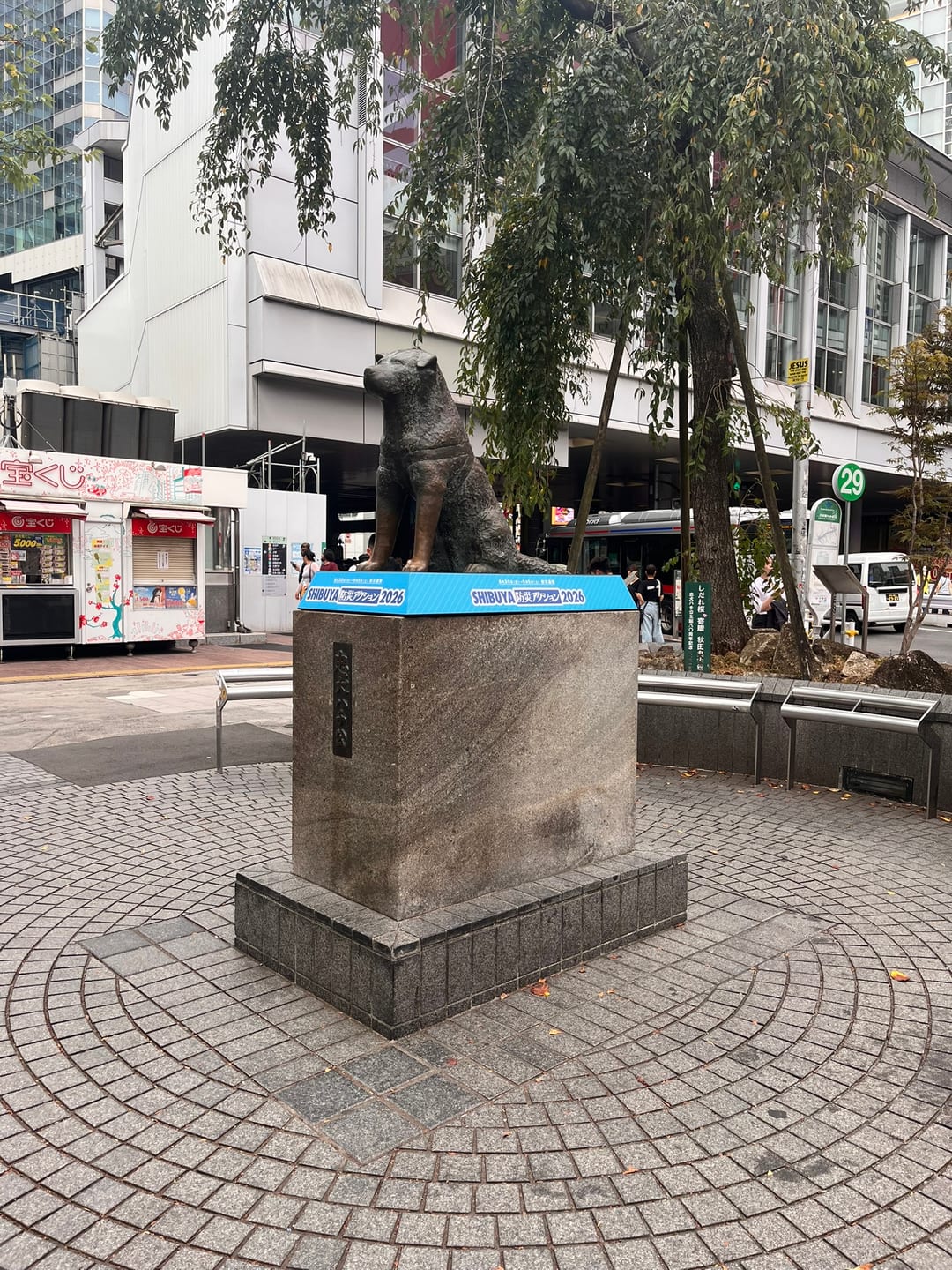
On this day we headed to the Meiji Shrine, a peaceful oasis in the heart of Tokyo. It is a Shinto shrine dedicated to the deified spirits of Emperor Meiji and his wife, Empress Shōken, and it is surrounded by a beautiful forest. We took a walk through the trees and visited the shrine. After that we went to the famous Shibuya crossing, where we saw the Hachiko statue, an Akita dog remembered for his remarkable and lifelong loyalty to his owner.
Then we had a light lunch and headed back to the hotel. We went to a Don Quijote, a Japanese discount store chain, to grab some additional souvenirs and pass the time before our omakase dinner. Omakase stands for "let the chef decide".
At 6pm we headed to Sushi Ya, a renowned sushi restaurant in Ginza, which we booked in advance. It is a high-end establishment known for its exceptional sushi and traditional dining experience. You are seated at the counter in front of the chef, so you can watch the preparation. The sushi was incredible and the atmosphere was perfect: the chef explained the techniques and the story behind each piece. The experience was remarkable.
Day 16: Kamakura
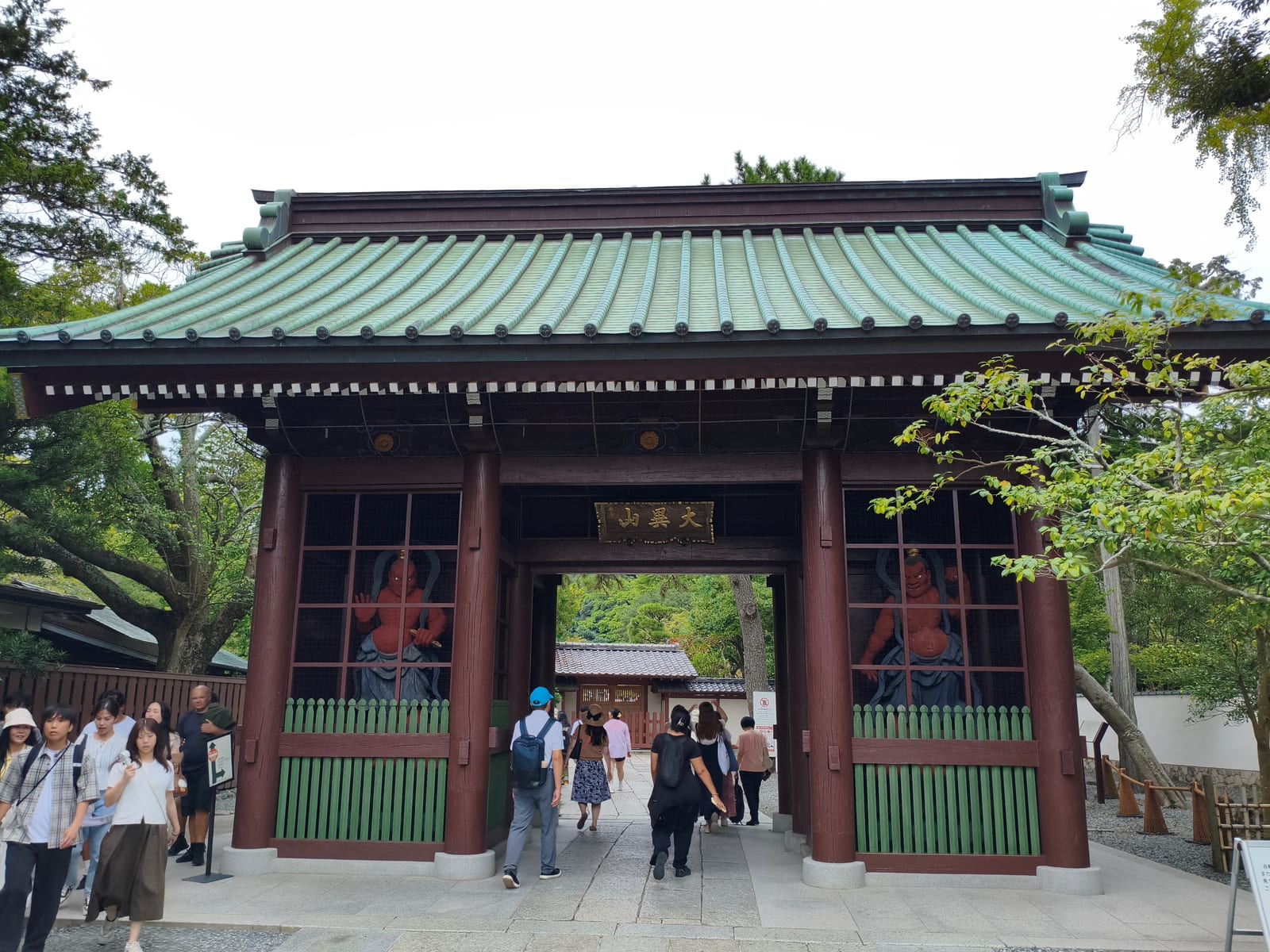
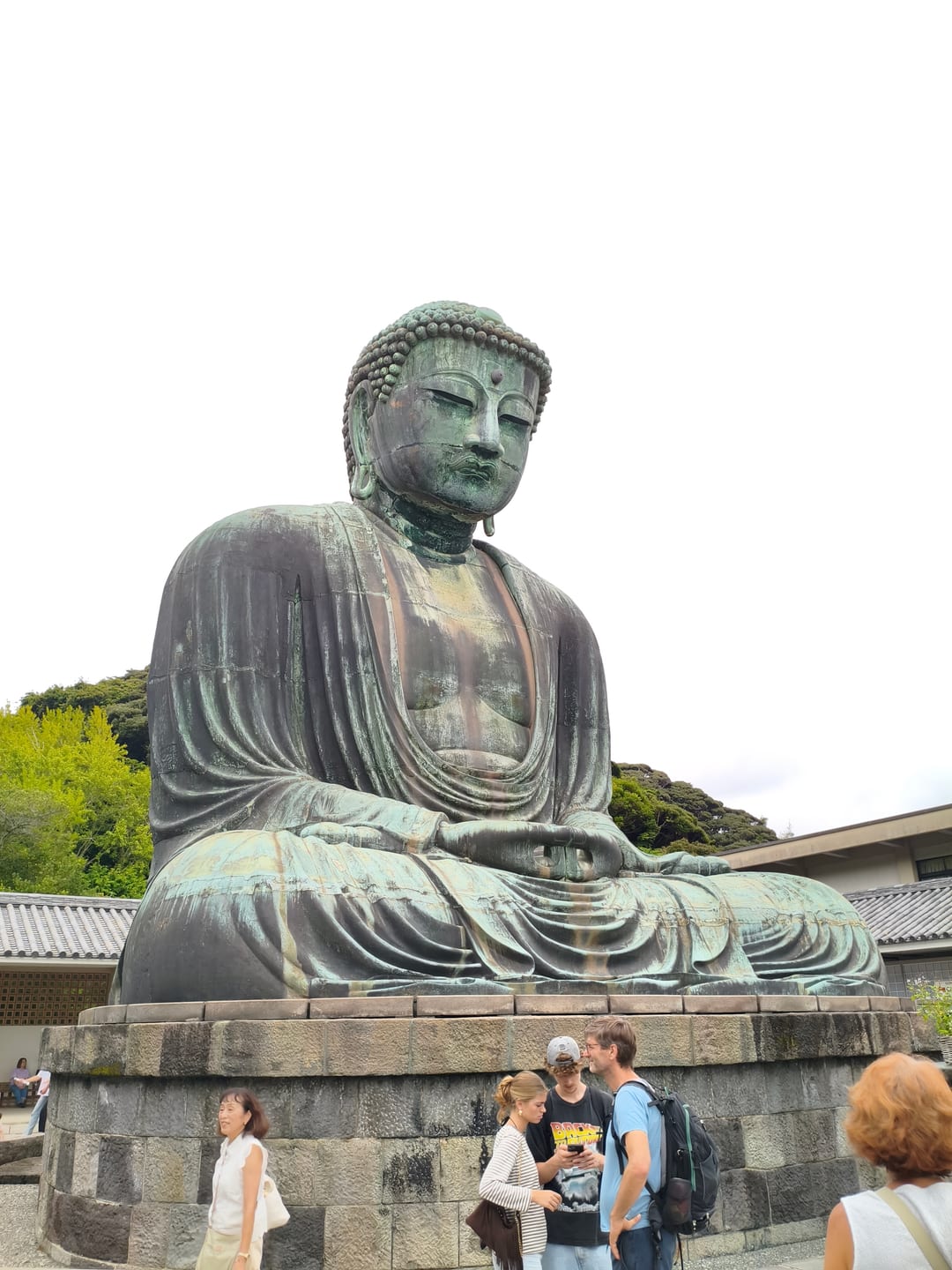
On this day we took a train to Kamakura, a historic coastal town known for its temples and shrines. We took the train from Tokyo Station to Kamakura Station, which takes about an hour. From Kamakura Station you then take another train to Hase Station, which is closer to the main sights. The total cost is around 1,200 to 1,400 yen per adult, one way. From there you walk uphill to the temples. We started with Kotoku-in, the Buddhist temple that houses the Kamakura Daibutsu, the Great Buddha. It is a short visit, around 20 minutes, but an impressive one.
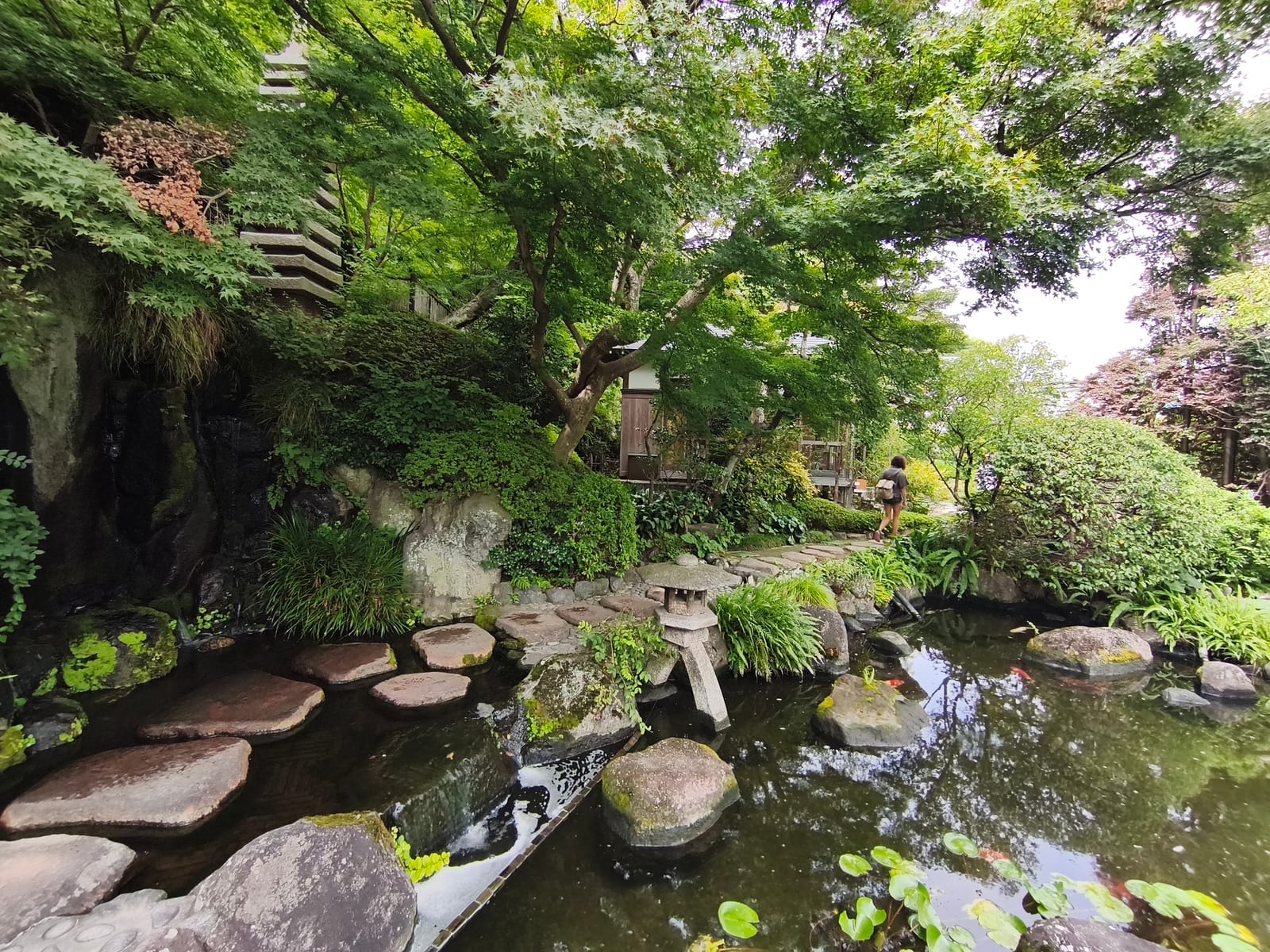
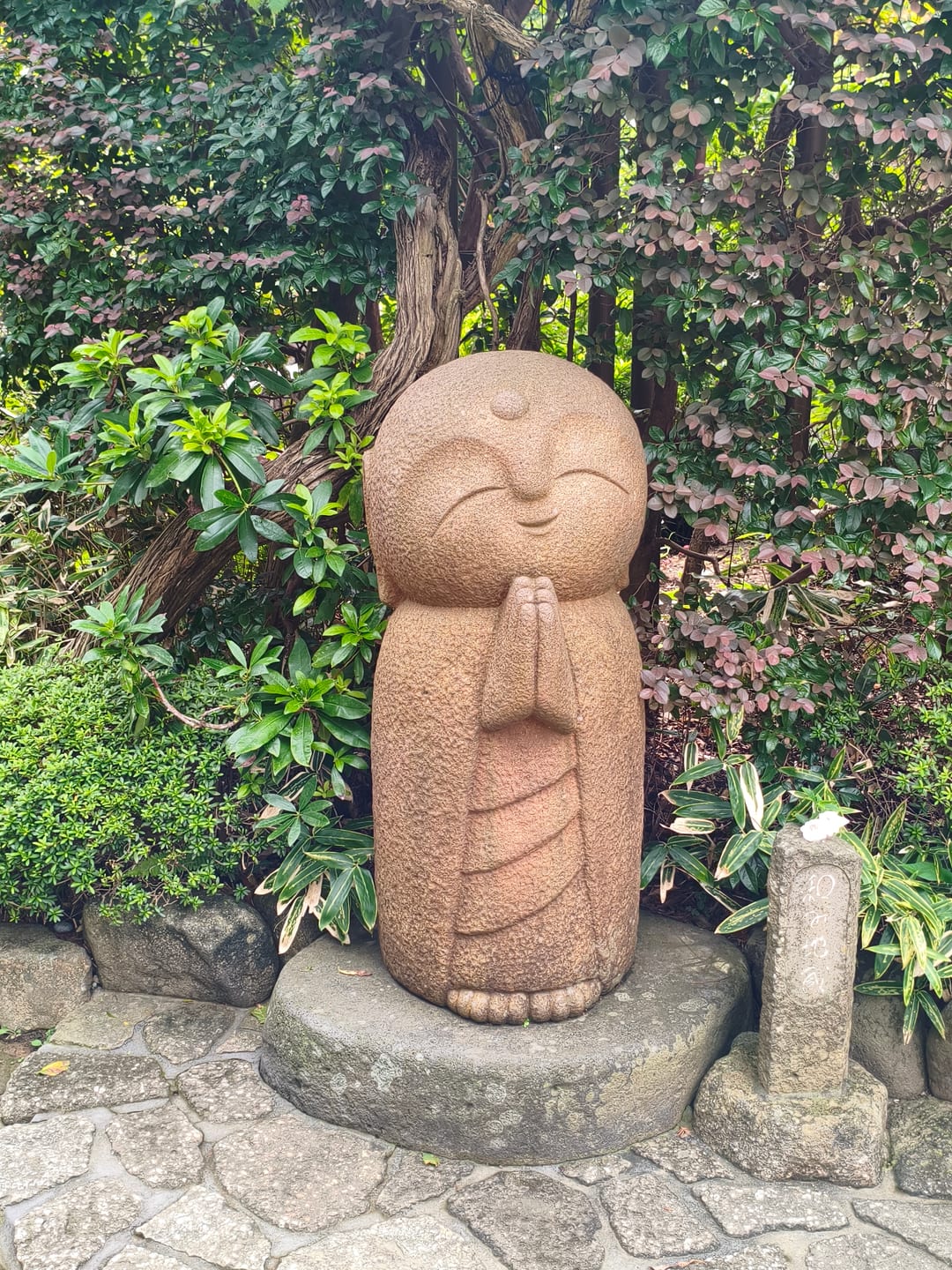
From there we headed to Hase-dera, a Buddhist temple famous for housing a wooden statue of Jūichimen Kannon, nine metres tall. The grounds are beautiful, with gardens and ponds, and there is a viewpoint from which you can see Kamakura and the ocean. There is also a well known stone statue of a praying monk. In the same grounds is the Benten Cave, a shrine carved into the hillside, which we found quite impressive.
After that we headed to Kamakura town centre for lunch. If you go at a weekend, book ahead: it is a popular day trip and plenty of locals as well as tourists visit, so everything is packed.
After lunch we headed back to the hotel in Ginza and had a relaxed evening, packing our bags for the next day, which was going to be our last full day in Tokyo.
Day 17: A last morning in Ginza
This was our last day in Japan. The flight was in the afternoon, so we spent the morning on one more stroll around Ginza, buying a few last presents before heading to the airport to fly home. This trip was special, Japan will always have a place in our hearts.
Where we stayed
The Knot Tokyo Shinjuku
We stayed at The Knot Tokyo Shinjuku, a modern hotel in the heart of Shinjuku. The room was a Deluxe Twin, and the size was decent for a city like Tokyo. It cost around 26,100 yens a night, roughly €147 or US$170, with breakfast included. The hotel is well located, a 5 to 10 minute walk from Shinjuku Station, and it is a fairly quiet area by Tokyo standards, so you can walk around without being disturbed.
What really stands out is the breakfast, and we highly recommend booking with it included. It is self-service, but with a big open kitchen and a lot of choice, and all of it was very good. If you don't book breakfast, there is a bakery in the hotel, MORETHAN BAKERY, which is pretty good as well. The room where breakfast is served is also a restaurant: at night it turns into a really cosy place serving tapas-style small dishes, and the food is pretty good.
One curious thing is that many hotels in Japan don't clean the rooms daily unless you ask, only every few days, as a way to save resources and reduce waste.
The Knot Tokyo ShinjukuSolaria Nishitetsu Hotel Ginza
We stayed at the Solaria Nishitetsu Hotel Ginza, a modern hotel in the heart of Ginza. The room was a Standard Double, it cost around 25,800 yensa night (roughly €145 or US$170). The size was okay, but the only small drawback was that one side of the bed was against a wall. The hotel is very well located, just a few minutes from the main shops and the metro station. We did not book breakfast here, since we wanted to explore the local food scene instead.
Solaria Nishitetsu Hotel GinzaPlanning your own Tokyo days? The 5-day Tokyo itinerary lays this out day by day with maps and travel times.
← Back to the full Japan route